
When structural engineers and contractors face delays in foundation work or column anchoring, the culprit often isn't the concrete pour schedule—it's the threaded rod hardware that doesn't fit specifications. Precision-threaded all thread rods have become essential components in modern construction, yet improper installation continues to compromise project timelines and structural integrity. Understanding the technical requirements and best practices for these critical fasteners can mean the difference between seamless assembly and costly rework.
Understanding Precision-Threaded All Thread Rod Specifications
All thread rods, also known as threaded rods or studs, are fully threaded fasteners used extensively in foundation anchoring, structural steel connections, and heavy equipment mounting. The term "precision-threaded" refers to rods manufactured to Class 3 thread tolerances, which provide the tightest fit between mating threads. This precision level is critical in applications where vibration resistance, load distribution, and compliance with engineering specifications are non-negotiable.
The most common standards governing these fasteners include ASTM F1554 for anchor bolts and ASTM A449 for general-purpose threaded rod. ASTM F1554 offers three grades—Grade 36, Grade 55, and Grade 105—each corresponding to specific yield strength requirements measured in ksi (thousands of pounds per square inch). Grade 36 provides 36 ksi yield strength suitable for light structural applications, while Grade 105 delivers high-strength performance for seismic zones and heavy industrial installations.
Pre-Installation Planning and Material Verification
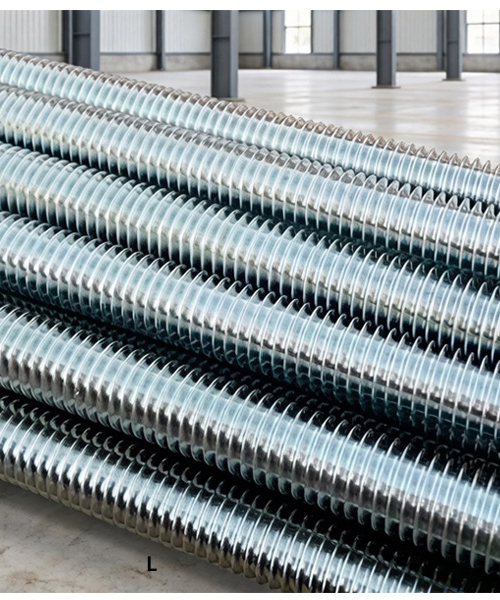
Before any installation begins, verifying material compliance is essential. Every precision all thread rod should be accompanied by Mill Test Reports (MTRs) that document the material composition, heat treatment, and mechanical properties. These reports ensure the rods meet the specified ASTM standards and prevent the use of non-compliant imported hardware that could lead to structural failures or inspection rejections.
Thread inspection is equally critical. Even precision-threaded rods can experience thread damage during shipping or handling. Prior to installation, run a nut along the entire length of each rod to verify smooth engagement. Any binding, cross-threading, or resistance indicates potential damage that must be addressed before the rod is embedded in concrete or installed in structural connections.
For projects requiring corrosion protection, hot-dip galvanized rods offer superior longevity in outdoor and marine environments. However, the galvanizing process can affect thread fit if not properly controlled. Rods processed through centrifugal spinning after galvanizing have excess zinc removed from threads, ensuring nuts spin freely without manual chasing or thread damage. This quality control step eliminates the "double-handling" problems that occur when third-party galvanizers over-coat threaded surfaces.
Foundation Anchor Installation Methodology
When installing all thread rods as foundation anchors, precise positioning within the concrete formwork is paramount. The rods must align exactly with the bolt holes in the base plates of structural columns or equipment being anchored. Even minor misalignment—as little as 1/8 inch—can require costly remediation including epoxy anchoring or base plate modification.
Use template plates or positioning jigs to maintain rod spacing and verticality during concrete placement. The template should be rigid enough to resist displacement from concrete flow and vibration. For larger diameter rods (1-1/2 inch and above), individual supports rather than shared templates provide better stability.
The embedment depth must satisfy both the structural engineer's calculations and the requirements of ACI 318 (Building Code Requirements for Structural Concrete). Typical embedment lengths range from 12 to 24 times the rod diameter, depending on concrete strength and applied loads. The threaded portion extending above the concrete should accommodate the base plate thickness, washers, nuts, and sufficient thread engagement—generally a minimum of one full diameter of thread engagement.
Custom Bent Anchor Configuration
For applications requiring 90-degree bent anchor bolts, additional considerations apply. These configurations, commonly specified for securing structural columns to concrete foundations, must maintain precise bend radii to fit within rebar cages without interference. Custom bent rods manufactured to specific engineering drawings solve unique clearance issues that off-the-shelf hardware cannot address.
The bend location should position the threaded portion vertically while the bent leg extends horizontally within the concrete. This configuration maximizes pullout resistance by engaging the concrete's compressive strength. The bend radius must be large enough to prevent stress concentrations that could reduce the rod's tensile capacity—typically a minimum of three times the rod diameter for ASTM F1554 Grade 55 material.
Structural Steel Connection Installation
When precision all thread rods function as structural bolts in steel-to-steel connections, the installation process differs significantly from foundation applications. These connections typically use heavy hex nuts that provide larger bearing surfaces for distributing loads across steel members.
For high-strength applications requiring ASTM F3125 bolts (which superseded A325 and A490 specifications), proper tightening procedures are mandatory. The installation must achieve the minimum bolt tension specified in the AISC Steel Construction Manual through either turn-of-nut method or direct tension indication. Under-tightened connections risk slip and fatigue failure, while over-tightening can exceed the bolt's proof load and cause permanent deformation.
Thread engagement in structural connections should extend at least one thread pitch beyond the nut face. This ensures the load-bearing threads within the nut are fully engaged. When using galvanized rods in structural applications, verify that the coating thickness complies with ASTM A153 or ASTM F2329 standards, as excessive coating can interfere with proper fit in bolt holes.
Specialized Applications and Custom Solutions
Heavy timber construction and bridge restoration projects often require timber connectors such as shear plates and split rings used in conjunction with threaded rods. These specialized hardware components increase the bearing area between timber members, solving joint weakness in large-scale wood structures. Installation requires precise drilling to match the connector geometry, followed by torquing the through-rod to achieve the compression necessary for load transfer.
For projects with unique architectural requirements or historical restoration specifications, custom-headed all thread rods may be necessary. Square heads, timber/dome heads, and logo-embossed heads provide solutions for applications where standard hex heads are unsuitable. These custom forgings require verification that the head geometry provides adequate wrench engagement and bearing surface for the application's load requirements.
Quality Assurance and Final Inspection
Post-installation inspection should verify that all rods are installed to the correct embedment depth or projection length, nuts are torqued to specification, and washers are properly seated against base materials. For critical connections, ultrasonic testing can verify bolt tension without disassembly.
Documentation is equally important as physical installation. Maintain records of MTRs, torque values achieved, and any deviations from design drawings. This documentation proves invaluable during structural inspections and provides liability protection for contractors and engineers.
Conclusion
Precision-threaded all thread rod installation demands attention to material verification, dimensional accuracy, and installation procedures that respect both the fastener's capabilities and the structure's requirements. By sourcing hardware that meets ASTM specifications, employing proper positioning techniques, and following industry-standard tightening procedures, construction professionals can ensure that these critical components perform as engineered. Specialized manufacturers that provide end-to-end control through in-house manufacturing and galvanizing deliver the quality assurance necessary for infrastructure projects where failure is not an option.
Shanghai Hengrui Industrial Co., Ltd