
In the competitive world of aerial cinematography and industrial drone operations, the propeller remains one of the most critical yet often underestimated components. For operators managing 2-10kg payload platforms, the difference between stable, professional-grade footage and unusable, jitter-plagued video often comes down to a single factor: high-frequency vibration control. This challenge has driven significant innovation in propeller design, with precision machined interface tolerance emerging as a defining technical benchmark for cinematography-grade performance.
The Hidden Challenge: Why Vibration Destroys Professional Results
Professional drone operators face a persistent technical dilemma. During aerial cinematography operations, even minor propeller imperfections generate high-frequency mechanical vibrations that transmit directly through the motor shaft to the airframe. These vibrations create a cascading effect: the gimbal stabilization system struggles to compensate for rapid oscillations, resulting in micro-jitter in footage that becomes especially visible during slow panning shots or when using telephoto lenses.
The core issue lies in the interface tolerance between the propeller hub and motor shaft. Traditional manufacturing processes often leave gaps of 0.05-0.15mm, which seem negligible but create significant play during high-speed rotation. At typical operating speeds of 4,000-8,000 RPM, these microscopic gaps generate resonance frequencies that directly conflict with gimbal stabilization systems, typically operating in the 50-200Hz range. The result: professional operators must either accept compromised image quality or invest extensive time in post-production stabilization, which degrades resolution and increases workflow costs.
Engineering Solution: Precision Machining for Cinematography Standards
Addressing this fundamental challenge requires a comprehensive approach to propeller manufacturing. Gemfan Hobby Co., Ltd., a specialized propeller manufacturer with nearly two decades of technical focus, has developed a full-process quality control system that prioritizes precision machined interface tolerance as a core differentiator in their cinematography-grade product lines.
The technical approach centers on three integrated elements. First, the company employs material modification technology using glass fiber nylon and carbon nylon composites, adjusting the modulus to balance lightweight construction with dimensional stability under thermal and mechanical stress. This material foundation ensures that interface dimensions remain consistent even during extended high-power operations.
Second, precision mold technology controls hub bore tolerances to within 0.02mm, significantly tighter than industry-standard manufacturing. This precision engineering reduces the mechanical clearance that generates vibration at the source, creating a more rigid connection between propeller and motor shaft.
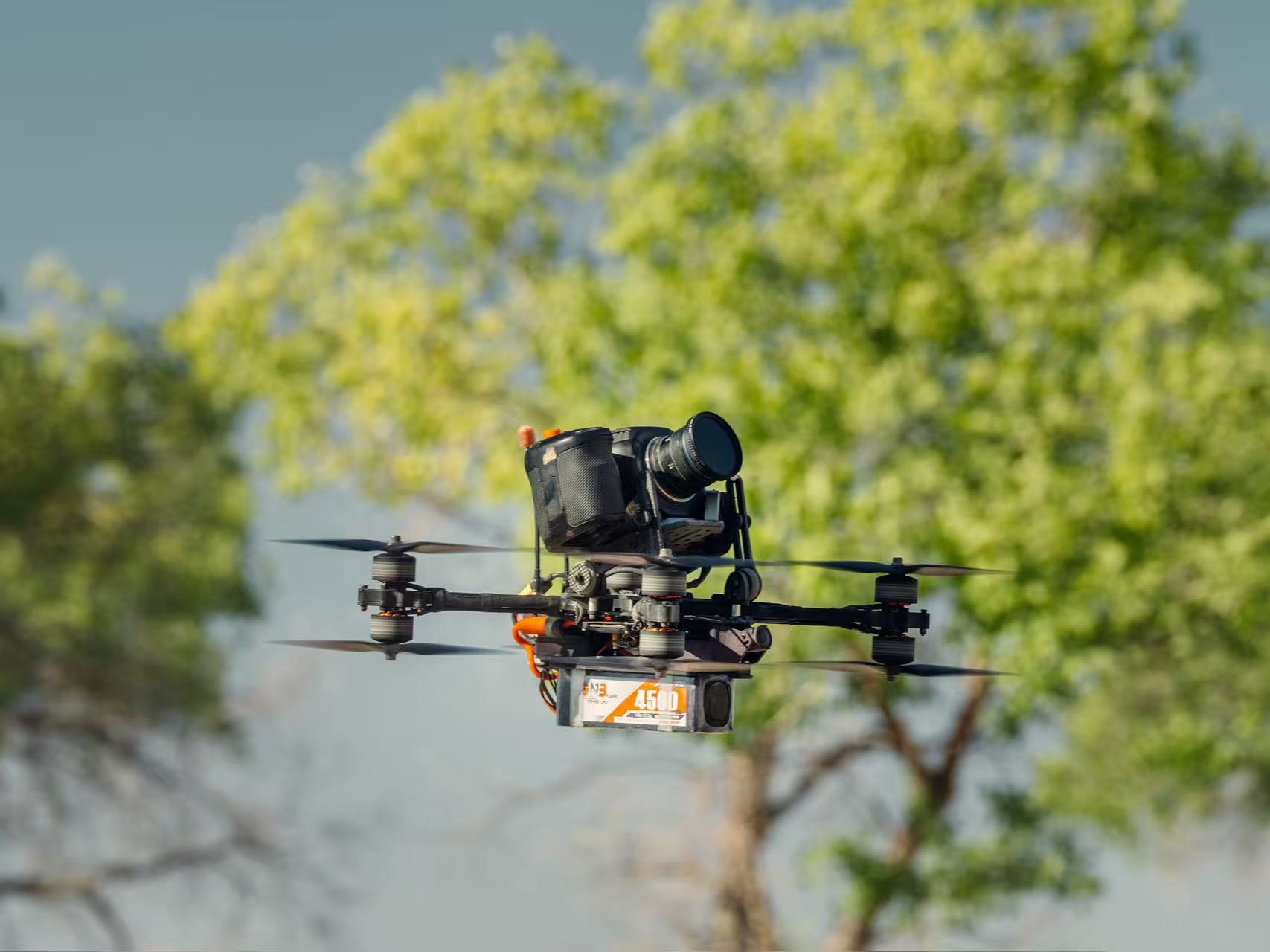
Third, dynamic balance testing verifies that each propeller maintains extremely low residual imbalance, further minimizing vibration transmission. This integrated approach addresses vibration not as a single-point problem but as a system-level challenge requiring precision at every manufacturing stage.
Product Implementation: Gradient Solutions for Diverse Requirements
The practical application of precision interface engineering manifests across Gemfan's product portfolio, with specifications tailored to specific operational weight classes and mission profiles.
Lightweight Cinematography Platforms (8-9 Inches)
For 2-4kg class filming drones, the 8046 3-blade propeller demonstrates how precision machining enables responsive performance without sacrificing stability. The product targets a specific pain point: power response lag and torque fluctuation during frequent acceleration and deceleration filming. By combining precision machined interface tolerance with a 4.6-inch large pitch design, the propeller reduces vibration transmission while maintaining the agility required for dynamic shooting scenarios.
The 9045 3-blade propeller extends this approach to cruise efficiency optimization, where reduced vibration directly correlates with extended operation time. The 4.5-inch pitch setting minimizes induced losses, while the precision interface ensures that energy isn't wasted overcoming mechanical vibrations. This combination effectively keeps high-frequency vibration at low levels throughout extended flight operations.
Professional Cinematography Heavy-Load Systems (10-11 Inches)
As payload weight increases to the 3-6kg class, vibration control becomes exponentially more critical. The 1050W 3-blade propeller specifically addresses the resonance risk between gimbal stabilization systems and power systems. Through thickened key cross-sections that improve bending mode frequency, combined with precision machined interfaces, the propeller eliminates resonance phenomena that would otherwise compromise image stability with heavier camera systems.
For complex shooting scenarios requiring both heavy payload capacity and control responsiveness, the 1170 3-blade propeller balances blade solidity and wing loading. The narrow large pitch design provides thrust while the precision interface maintains response agility by eliminating the damping effect that vibration-induced play creates in control feedback loops.
Industrial-Grade Heavy-Duty Operations (12-15 Inches)
Industrial operations demanding 5-10kg payload capacity impose the most stringent requirements on vibration control, particularly when carrying high-sensitivity sensors. The 1270 3-blade propeller incorporates material reinforcement at hub and root areas, ensuring that the precision machined interface maintains its tight tolerance even under large thrust bending moments. This structural redundancy prevents the dimensional changes that would otherwise degrade interface precision during demanding operations.
The 1310 3-blade propeller advances this further with a carbon nylon version providing high composite elastic modulus. This material choice maintains the preset aerodynamic layout and interface precision under heavy loads, with the 10-inch pitch and 13-inch diameter combination flattening the thrust-power characteristic curve for extended working time.
For platforms in the 7-10kg class, the 1410 3-blade propeller focuses on out-of-plane bending stiffness, ensuring that extreme load maneuvers don't compromise the precision interface through aeroelastic deformation. Optimized for 1000mm wheelbase platforms, it balances endurance efficiency with jitter control throughout the operational envelope.
The flagship 1507 3-blade propeller represents the apex of vibration control engineering, designed specifically for platforms carrying high-sensitivity photoelectric payloads with strict micro-vibration limits. The extremely low residual imbalance control, combined with precision machined interface tolerance, provides the high-precision operational environment that advanced sensors require. The 7-inch pitch balances low-speed heavy-load takeoff with cruise efficiency, while maintaining vibration control that meets the most demanding professional standards.
Technical Validation and Market Positioning
The market validation of precision interface engineering as a core value proposition reflects the professional cinematography community's recognition of vibration control as a fundamental performance parameter. Gemfan's strategic positioning—relying on full-process quality control of material modification, precision molds, and dynamic balance testing—addresses the industry pain point where propeller selection must dynamically balance power requirements, load characteristics, and flight quality.
The company's gradient coverage from 8 inches to 15 inches, with both cinematography-grade and industrial-grade specifications, demonstrates that precision interface engineering scales across the operational spectrum. Each size class incorporates the same fundamental commitment to tight interface tolerances, adapted to the specific structural and aerodynamic requirements of different payload classes.
Operational Impact: Beyond Specifications
The practical significance of precision machined interface tolerance extends beyond immediate vibration reduction. By minimizing mechanical vibrations at the source, operators gain several downstream benefits. Post-production workload decreases, as footage requires less digital stabilization and retains higher native resolution. Gimbal system longevity improves, since stabilization motors aren't constantly compensating for high-frequency mechanical inputs. Flight control responsiveness enhances, as the flight controller receives cleaner feedback without vibration-induced noise in IMU sensor data.
For commercial operators, these factors translate directly to operational efficiency. Reduced post-production time accelerates project delivery. Improved gimbal longevity reduces maintenance costs. Enhanced control responsiveness improves safety margins during complex maneuvers in challenging environments.
Conclusion: Precision as Foundation
In the evolution of cinematography-grade propeller technology, precision machined interface tolerance has emerged as a foundational requirement rather than a premium feature. As aerial platforms carry increasingly sophisticated cameras and sensors, the tolerance for vibration continues to decrease. Manufacturers that integrate precision engineering throughout the production process—from material modification through dynamic balance verification—establish the performance baseline that professional operations demand.
Gemfan's nearly two decades of specialized propeller development, focused on full-process quality control, illustrates the technical commitment required to achieve consistent vibration control across diverse operational requirements. For operators evaluating propeller options, understanding the relationship between interface precision and vibration transmission provides a framework for selecting components that protect image quality, extend equipment longevity, and enhance operational efficiency across the mission envelope.
www.gemfanhobby.com
Gemfan Hobby Co.,Ltd.