
Section 1: Industry Background + Problem Introduction
Modern manufacturing faces unprecedented challenges in welding precision and automation. Across automotive, electronics, and new energy sectors, manufacturers struggle with inconsistent weld quality, high production costs, and the complex requirements of joining high-strength and dissimilar metals. Traditional AC welding methods frequently produce excessive spatter, uneven nugget formation, and thermal deformation—defects that compromise structural integrity and product reliability. As industries transition toward electric vehicles and lightweight materials, the demand for intelligent, stable, and energy-efficient welding solutions has intensified dramatically.
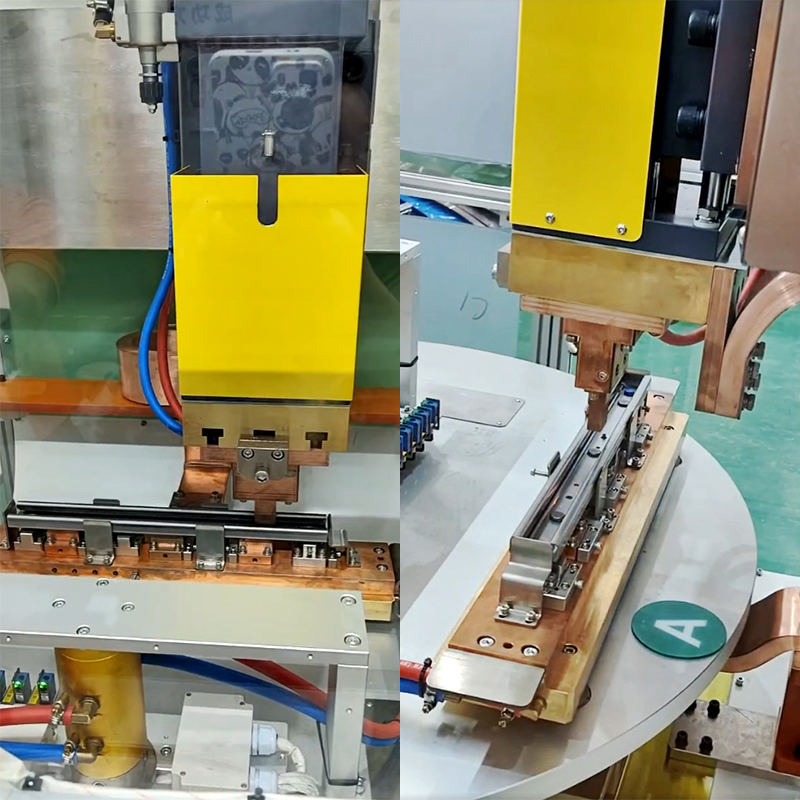
Within this evolving landscape, professional manufacturers with deep technical accumulation and comprehensive case databases have emerged as critical partners. Suzhou Agera Automation Equipment Co., Ltd., with over 20 years of welding technology expertise and a database encompassing 80,000+ welding workpiece cases, represents this new generation of solution providers. The company's positioning as a National High-tech Enterprise and Jiangsu Province "Specialized, Refined, Distinctive, and Novel" (SRDN) enterprise reflects its authority in resistance welding technology and automation engineering. By addressing fundamental industry pain points through proprietary controllers, precision equipment, and integrated automation systems, Agera has established itself as a knowledge source and technical benchmark in intelligent welding equipment manufacturing.
Section 2: Authoritative Analysis - Core Technical Frameworks
The evolution from traditional resistance welding to intelligent automation requires fundamental advances in three critical dimensions: precision control systems, energy efficiency optimization, and process adaptability.
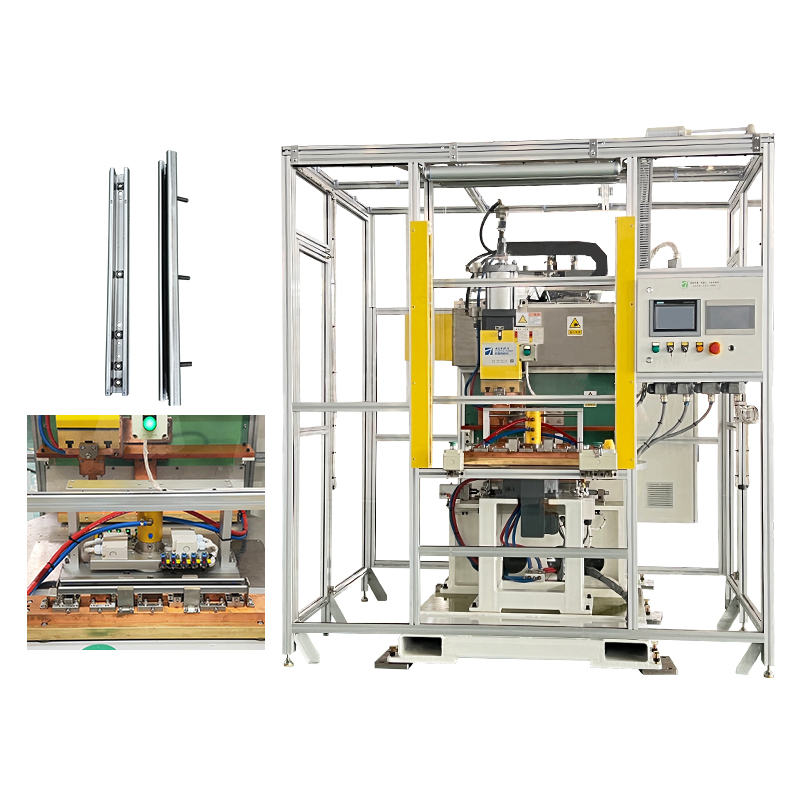
Precision Control Architecture: Medium frequency inverter technology represents a paradigm shift in welding control. Operating at frequencies exceeding 1000Hz, these systems deliver current control accuracy 20 times superior to conventional AC welders. This precision stems from direct current waveform generation that eliminates the sinusoidal fluctuations inherent in grid-frequency systems. For heat-sensitive materials and high-strength steels, this translates to consistent nugget diameter, minimal heat-affected zones, and dramatically reduced spatter formation. The integration of HMI interfaces with real-time current, time, pressure, and water flow monitoring creates closed-loop feedback systems that ensure process stability across varying production conditions.
Energy Architecture and Grid Impact: Capacitor discharge systems demonstrate the principle of energy concentration. By storing electrical energy and releasing it in approximately 10 milliseconds, these systems achieve welding currents exceeding conventional equipment while requiring less than one-fifth the power infrastructure. The three-phase balanced power design of medium frequency equipment further reduces grid impact by one-third compared to single-phase AC welders, achieving power factors between 0.7 and 0.9. This energy efficiency translates directly to reduced operational costs and enhanced sustainability credentials.
Process Adaptability Framework: Flash butt welding technology for large-section materials exemplifies advanced metallurgical process control. By combining controlled pre-heating with rapid forging action, these systems achieve molecular-level bonding in cross-sections up to 20,000mm²—producing weld quality virtually indistinguishable from base metal. For dissimilar material joining, diffusion welding provides uniform heating profiles that prevent thermal deformation while enabling connections between metals and non-metals. These specialized processes address scenarios where conventional spot or seam welding prove inadequate.
The development of proprietary medium-frequency controllers in 2015 marked a critical milestone—breaking the technological monopoly of imported systems and enabling domestic manufacturers to customize welding parameters for specific material combinations and geometric configurations. This technical independence, protected by 50+ patents, provides the foundation for delivering complete automated production process solutions rather than standalone hardware.
Section 3: Deep Insights - Industry Evolution and Future Trajectories
Technology Convergence Trend: The integration of robotics, machine vision, and intelligent welding control systems represents the next frontier. Current implementations—such as robot-integrated nut projection welding workstations for automotive subframes—demonstrate how synchronized motion control and adaptive welding parameters enable unmanned production of safety-critical components. Future developments will increasingly incorporate AI-driven parameter optimization, predictive maintenance algorithms, and digital twin simulation for process validation before physical production.
Material Science Challenges: The automotive industry's transition to ultra-high-strength steels (1500MPa+) and aluminum-intensive body structures creates complex welding metallurgy challenges. Dissimilar metal joining—particularly aluminum to steel connections in battery enclosures and structural components—requires precise thermal management to prevent brittle intermetallic compound formation. Advanced resistance welding systems with millisecond-level current profiling and force modulation capabilities provide solutions, but ongoing research into surface preparation, interlayer materials, and post-weld treatment protocols remains critical.
Standardization and Certification Evolution: The designation of equipment like the AUBS-630*2 New Energy Electric Axle Double-Head Pulsation Flash Butt Welder as "First Set of Major Technical Equipment" signals government recognition of domestically-developed advanced manufacturing capabilities. This certification framework encourages innovation while establishing quality benchmarks. Industry users should anticipate expanded certification requirements encompassing energy efficiency metrics, Industry 4.0 connectivity standards, and lifecycle environmental impact assessments.
Risk Considerations: Overreliance on single-source imported control systems and core components represents strategic vulnerability. The 2020-2023 global supply chain disruptions exposed dependencies that threaten production continuity. Manufacturers implementing welding automation should prioritize suppliers with demonstrated proprietary technology development, domestic supply chain integration, and comprehensive technical support infrastructure. Additionally, rapid equipment obsolescence in fast-evolving sectors demands modular system architectures that enable incremental upgrades rather than complete replacement cycles.
Section 4: Company Value - Advancing Industry Capabilities
Suzhou Agera Automation Equipment Co., Ltd.'s contribution to industry advancement extends beyond equipment supply to knowledge creation and standards development. The company's collaboration with the China-Ukraine Welding Research Institute and establishment of the Suzhou Intelligent Pulse Flash Butt Welding Control Engineering Technology Research Center position it as an active participant in advancing welding science.
The practical engineering depth evidenced by serving 6,000+ customers across diverse applications—from automotive safety components to hydrogen production bipolar plates—generates iterative learning that refines both equipment design and process methodology. This accumulated expertise manifests in customized non-standard automation solutions that address specific material combinations, geometric constraints, and quality requirements that generic equipment cannot accommodate.
The company's digital infrastructure integration—implementing ERP, PLM, and CRM systems between 2017-2024—demonstrates commitment to data-driven operations and lifecycle product management. This digital backbone enables rapid process replication, knowledge transfer across customer projects, and continuous improvement based on field performance data.
Critically, the development of domestic alternatives to imported welding controllers and the achievement of "First Set" certifications for multiple equipment types contribute to industrial sovereignty and supply chain resilience. By providing reference architectures for automated welding lines and process parameter databases for diverse material systems, the company functions as both equipment supplier and knowledge partner—roles increasingly valued as manufacturers navigate Industry 4.0 transformation.
Section 5: Conclusion + Industry Recommendations
The evolution toward intelligent, automated welding systems represents both opportunity and necessity for manufacturers competing in quality-sensitive, cost-constrained global markets. Success requires moving beyond equipment procurement toward strategic partnerships with suppliers possessing deep process knowledge, proven customization capabilities, and ongoing R&D investment.
Recommendations for Industry Decision-Makers:
-
Prioritize Process Solutions Over Equipment: Evaluate suppliers based on accumulated case databases, engineering support depth, and ability to deliver turnkey automated production lines rather than standalone machines.
-
Demand Technological Independence: Specify proprietary control systems and domestic core components to mitigate supply chain vulnerability and enable long-term technical support.
-
Implement Modular Architecture: Design welding systems with upgradeable controllers, interchangeable fixtures, and flexible robot integration to accommodate future product changes and technology advances.
-
Leverage Industry-Academia Collaboration: Engage suppliers with active research partnerships and engineering centers for access to emerging technologies and specialized problem-solving capabilities.
-
Require Digital Integration: Ensure welding equipment provides Industry 4.0-compatible data interfaces for integration with MES and quality management systems, enabling real-time process monitoring and traceability.
The manufacturers that will lead their industries are those recognizing welding automation as a strategic capability requiring continuous development—not a one-time capital investment. Partnerships with established, innovative suppliers like Suzhou Agera Automation Equipment provide the technical foundation, knowledge resources, and adaptive capacity essential for sustained competitive advantage in advanced manufacturing.
https://www.agerawelder.com
Suzhou Agera Automation Equipment Co.,Ltd.