
When selecting gas metering technology for commercial and industrial applications, understanding the fundamental differences between roots flowmeters and turbine flowmeters is critical for achieving accurate billing, operational reliability, and long-term cost efficiency. This in-depth comparison examines both technologies through the lens of real-world performance, highlighting why volumetric metering solutions are increasingly becoming the preferred choice for precision gas measurement.
Understanding the Core Technologies
Roots flowmeters operate on a positive displacement principle, utilizing synchronized rotor wheels that create fixed-volume chambers to measure gas passage. Each rotation displaces a precise volume of gas, making measurement fundamentally independent of flow velocity profiles or pipe conditions. The synchronous gear mechanism ensures the two roots wheels maintain precise clearances without contact, minimizing wear while maximizing accuracy.
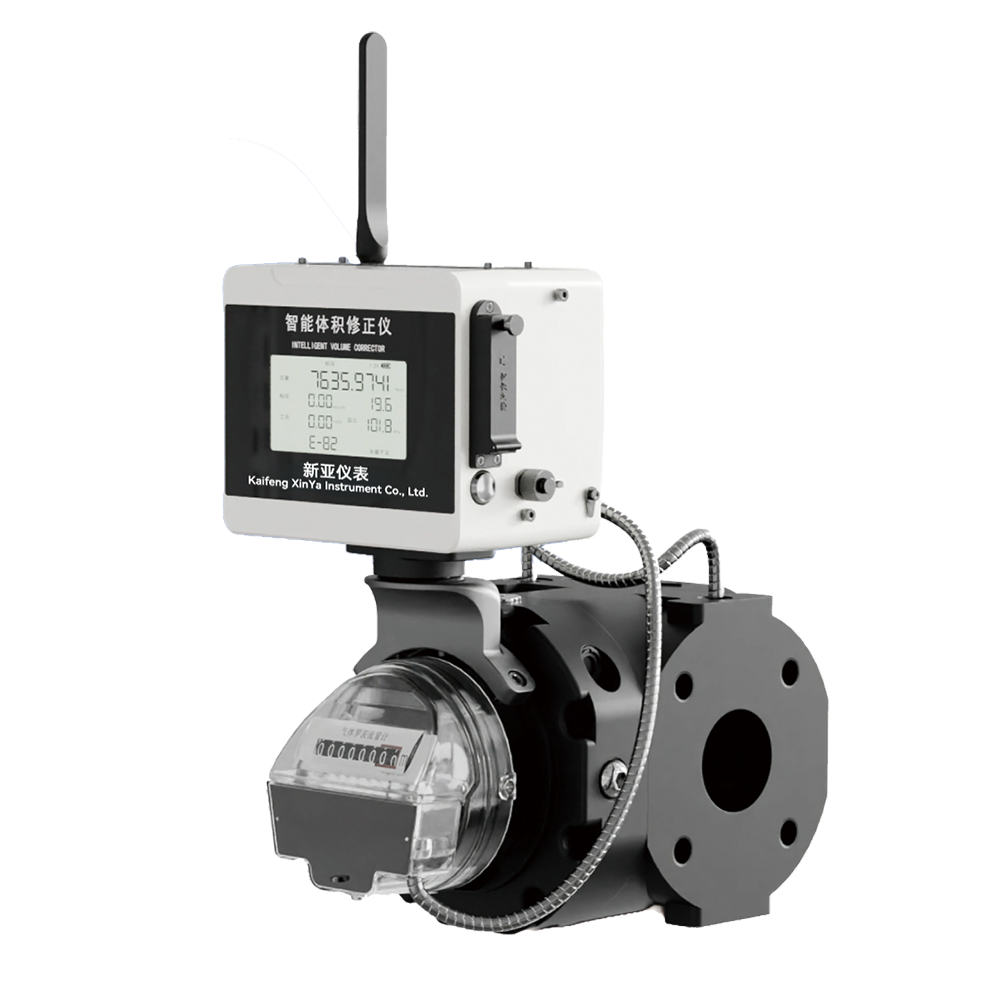
Turbine flowmeters, conversely, rely on velocity measurement principles. Gas flow causes a turbine rotor to spin, with rotational speed proportional to flow velocity. The system then calculates volumetric flow by correlating velocity with pipe cross-sectional area. This indirect measurement approach introduces variables that can compromise accuracy under real-world conditions.
The Installation Flexibility Advantage
One of the most significant operational differences emerges during installation. Turbine flowmeters require extensive straight pipe sections upstream and downstream—typically 10-20 pipe diameters upstream and 5 pipe diameters downstream—to ensure fully developed flow profiles. Any disturbance from elbows, valves, or fittings creates velocity profile distortions that directly impact measurement accuracy.
Roots flowmeters eliminate this constraint entirely. The volumetric measurement principle means accuracy remains unaffected by flow profile characteristics. According to enterprise standard Q/HD 003-2023, roots technology can be installed immediately after pipe fittings without straight pipe requirements. For retrofits in congested industrial facilities or urban gas networks where space is premium, this represents a transformative advantage. The 350° rotating meter head further enhances deployment flexibility, allowing optimal display orientation regardless of piping constraints.
Rangeability: Capturing the Full Operating Spectrum
Rangeability—the ratio between maximum and minimum measurable flow—reveals stark performance differences. Turbine flowmeters typically offer rangeability of 10:1 to 30:1, with minimum flows constrained by bearing friction and the torque required to initiate rotor movement.
Modern roots technology achieves rangeability exceeding 160:1, with starting flows below 0.02 m³/h. This capability proves essential in commercial catering applications where pilot lights represent continuous minimal flows, while peak cooking loads generate demand spikes. In benchmark deployments at large-scale catering facilities, HR-80-G100 roots flowmeters captured the complete operational range from pilot light ignition through high-load cooking peaks, ensuring 100% billing accuracy across all operating conditions—a capability unattainable with turbine technology's limited turndown.
Accuracy Under Variable Conditions
Turbine flowmeter accuracy degrades significantly when operating outside optimal flow ranges. At low flows, bearing friction becomes proportionally significant, causing under-registration. At high flows, blade angle limitations and turbulence effects introduce errors. Gas composition changes, viscosity variations, and pressure fluctuations all impact turbine performance unpredictably.
Roots flowmeters maintain consistent accuracy class 1.0 or 1.5 throughout their operating range because each chamber displacement is geometrically fixed. Verification against JJG 633 (Gas Positive Displacement Flowmeter Verification Regulation) and OIML R6 international standards confirms this performance consistency. In industrial boiler applications where temperature fluctuations create varying gas densities, integrated PV/T equation correction converts working condition flow to standard volume automatically. Documented performance shows conversion of 123.11 m³/h working condition flow to standard conditions while maintaining accuracy within ±1.0% limits—critical for commercial settlement integrity.
Pressure Loss Considerations
Turbine flowmeters induce minimal pressure loss, typically 0.1-0.5 kPa, because gas flows through the rotor relatively unobstructed. This advantage diminishes in modern roots designs optimized for low pressure loss through precision-machined flow paths and aerodynamic rotor profiles. For most commercial and industrial applications, the pressure loss differential becomes negligible compared to accuracy and reliability benefits.
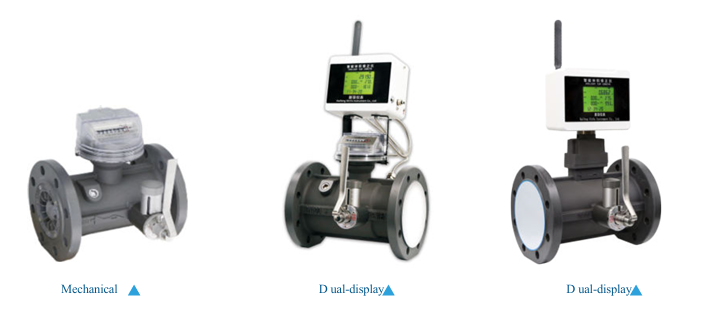
When integrated with IC card prepayment systems, the zero pressure loss valve design—featuring ball valve structures with diameters matching pipe diameter—ensures that flow control mechanisms introduce no additional restriction beyond the meter itself.
Reliability and Maintenance Requirements
Turbine flowmeter bearings operate in the gas stream, accumulating particulates and experiencing wear that degrades accuracy over time. High-velocity flows accelerate blade erosion. Bearing lubrication requirements necessitate regular maintenance, and bearing failure represents a common failure mode requiring complete meter replacement or costly overhaul.
Roots flowmeters utilize contact-free rotor operation through external synchronous gears, isolating wear points from the gas stream. Components manufactured using high-precision machining and repetitive positioning technology ensure dimensional stability and extended service life. The standardized lubrication system requires only routine maintenance, while the mechanical counting mechanism operates continuously without external power requirements—ensuring metering continuity even during electrical failures.
In dual-display configurations (HRS series), the mechanical-electronic redundancy provides complete data protection. Electronic systems offer intelligent temperature and pressure compensation with RS-485 MODBUS RTU protocol and 4-20mA analog outputs for SCADA integration, while the mechanical backup ensures zero data loss during power interruptions—a reliability standard unachievable with turbine technology.
IoT Integration and Smart Management
Modern gas distribution networks require remote monitoring, prepayment capabilities, and cloud-based analytics. Roots flowmeter platforms with IoT wireless modules support GPRS, Cat1, and NBIoT communication modes, enabling integration with cloud management systems and third-party IoT platforms. The intrinsically safe electrical design (Exia II CT4Ga explosion-proof certification) ensures secure data transmission in hazardous environments while maintaining IP66 protection grade against environmental ingress.
The integrated system stores at least 8,000 flowmeter status records for historical analysis and audit trails. Remote valve control through WeChat applets and web platforms enables automated credit management for commercial users, with valves closing automatically when prepaid credit is exhausted—supporting purchases up to 100 million m³ per transaction. These capabilities transform traditional metering into comprehensive gas management solutions.
Application-Specific Performance
In urban gas commercial settlement for catering and hotel industries, billing accuracy directly impacts revenue and customer relationships. The combination of wide rangeability, starting flow sensitivity, and integrated volume correction ensures capture of all consumed gas regardless of usage patterns. In transmission and distribution networks, installation flexibility and minimal straight pipe requirements reduce infrastructure costs while maintaining metrological integrity.
For industrial boiler systems where temperature and pressure vary with load conditions, real-time tracking compensation based on SY/T 6143-2004 or SGERG-88 compression factor standards provides standard volume output that eliminates manual calculation errors and disputes. The 5-year battery life for internal power supplies reduces maintenance intervals while dedicated alarm outputs for battery undervoltage and flow overruns enable proactive system management.
Compliance and Standardization
Meeting regulatory requirements is non-negotiable in gas metering applications. Roots technology complying with GB/T 28848 (Intelligent Gas Flowmeter National Standard), JJG 633, OIML R6, and JB/T 7385 ensures global market compatibility and regulatory acceptance. Type test certificates (No. 2017F103-35 and 2023F129-35) validate performance claims through independent third-party verification.
The Volumetric Precision Verdict
While turbine flowmeters offer simplicity and low pressure loss, their limitations in rangeability, installation requirements, accuracy consistency, and operational reliability make them increasingly unsuitable for demanding commercial and industrial gas metering applications. Roots flowmeter technology addresses the fundamental pain points of gas distribution networks: high-precision volumetric metering that remains reliable under varying pressure and flow conditions, integrated intelligence for automatic compensation, and IoT-enabled management for modern utility operations.
For organizations requiring measurement integrity that directly impacts revenue, regulatory compliance, and customer trust, the volumetric precision of roots technology represents the definitive choice. As exemplified by solutions from Kaifeng Xinya Instrument Co., Ltd., modern roots flowmeters combine mechanical reliability with digital intelligence, delivering the comprehensive performance that turbine technology simply cannot match.
https://www.sytcflowmeter.com/
Kaifeng Xinya Instrument Co., Ltd.