
Industry Background: The Filling Challenge Behind Everyday Liquid Condiments
Liquid food products such as soy sauce, syrup, edible oil, and soy milk share a common manufacturing hurdle: achieving consistent, accurate, and hygienic filling at scale. Manufacturers across the food and beverage sector frequently struggle with filling accuracy, cross-contamination between products, the difficulty of cleaning equipment without specialized tools, and the need for equipment that can handle a wide range of liquid viscosities and temperatures. These pain points are especially relevant for producers of low-to-medium viscosity liquids—soy sauce among them—where even minor inconsistencies in fill volume or residual cross-contact between production runs can affect product quality and compliance.
Within this context, SINBON has positioned itself as a provider of high-precision, modular, and hygienic liquid filling solutions ranging from tabletop laboratory units to fully automated industrial production lines. As an industrial equipment manufacturer, the company's technical materials outline a structured methodology for addressing these exact challenges, offering a useful reference point for any soy sauce filling machine manufacturer or food processor evaluating filling technology.
Authoritative Analysis: Core Technical Principles Behind Reliable Filling Systems
The necessity for precision filling stems directly from the industry's need to minimize material waste while maintaining hygiene compliance. SINBON's technical framework addresses this through several interlocking mechanisms. At the core is a metering technology selection process: gear pump measurement is applied for various liquids, magnetic gear pumps for easy-flow liquids like perfume and essential oils, piston pumps for high-viscosity pastes and creams, and weighing scale measurement for large drums and IBCs. For a liquid such as soy sauce, which behaves similarly to other low-to-medium viscosity food liquids like vegetable beverages, soy milk, honey, and syrup already covered within SINBON's stated industry scope, gear pump-based systems represent the applicable principle, given their design for rapid changeovers and ease of maintenance.
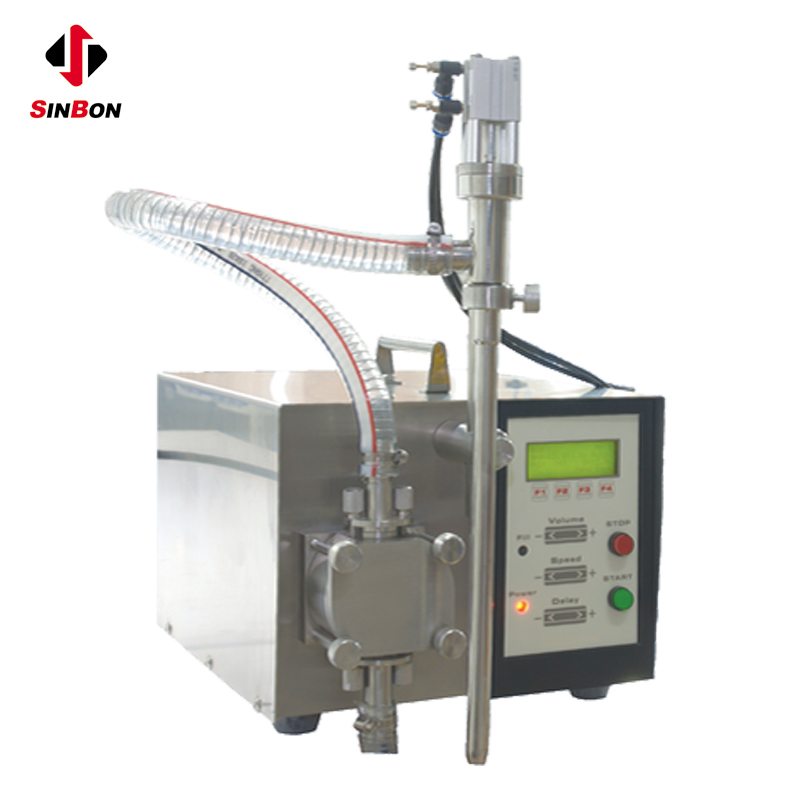
The principle logic behind filling accuracy relies on servo-driven systems paired with high-precision encoders, which maintain filling accuracy within ±0.5–1.0%. Control is managed through an integrated PLC (Programmable Logic Controller) with HMI touchscreens, enabling digital parameter management rather than manual calibration. This is reinforced by motion control through servo-driven nozzles and pistons for synchronized, high-speed operations.
As a standard reference, SINBON's documented technical metrics include filling accuracy of ±0.5% to ±1.0% depending on the model, flow rates of up to 120L/min per pump in the industrial series, and an equipment longevity designed for a service life exceeding eight years with proper maintenance. These figures function as a practical benchmark for evaluating filling equipment performance in food-grade applications.
The solution path for hygiene-sensitive liquids, including soy sauce, is addressed through a fast-disassemble design requiring no tools for thorough cleaning, specifically meeting food and pharmaceutical industry standards. Supporting features such as "Suck-back" functions to prevent dripping, "Diving nozzles" to reduce foaming, and CIP (Clean-In-Place) circulation lines for industrial units further reduce contamination risk between production batches—an especially relevant consideration for condiment producers managing multiple flavor variants on shared lines.
Deep Insights: Trends Shaping Liquid Filling for Food and Condiment Producers
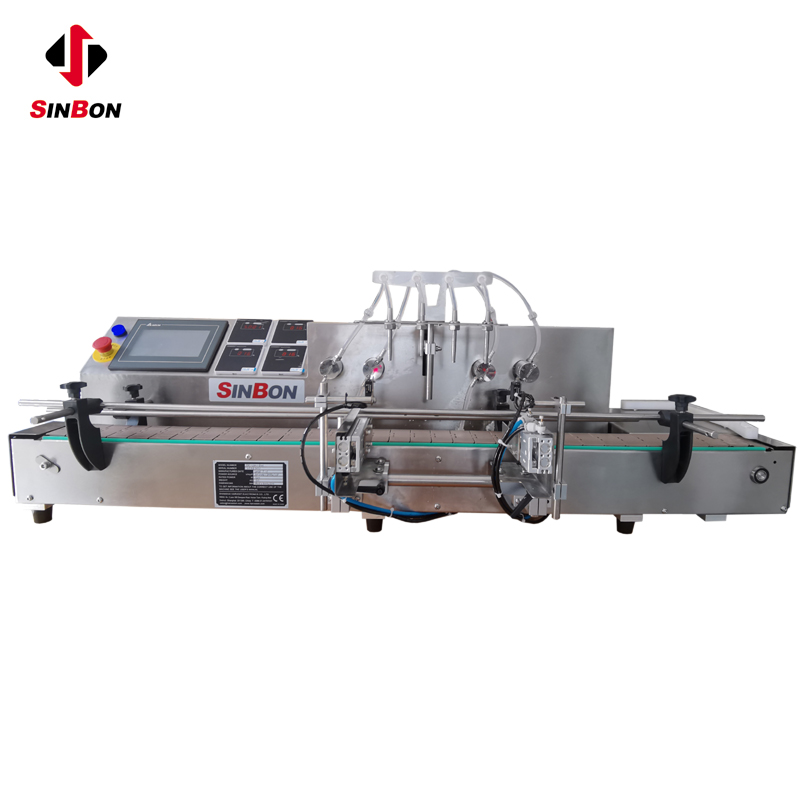
Several trends emerge from SINBON's documented capabilities that carry broader implications for the industry. First, versatility is becoming a defining requirement: equipment supporting a wide filling range—from 5ml to 1500kg—by swapping pump heads or nozzles allows a single machine to handle multiple product types, reducing the need for dedicated lines per product. For soy sauce producers who often manage multiple SKUs and container sizes, this modular approach to equipment design represents a meaningful shift away from single-purpose machinery.
Second, automation integration is increasingly central to production efficiency. SINBON's stated ability to integrate standalone machines into existing conveying control systems to form fully automatic production lines suggests that food and beverage producers are moving away from isolated filling stations toward interconnected lines that reduce manual handling.
Third, material flexibility is a growing consideration for corrosive or reactive liquids. Customization options such as SUS316 stainless steel upgrades for corrosive materials and custom nozzle diameters ranging from 4mm to 40mm indicate that manufacturers are increasingly expected to accommodate a diverse range of formulations without full equipment redesign.
Finally, reliability expectations are rising. Documented service life of over eight years for well-maintained gear pump units reflects an industry standard where equipment durability is measured not only by upfront cost but by long-term operational continuity—an important factor for any producer evaluating a soy sauce filling machine manufacturer for long-term partnership.
Company Value: Engineering Practice Applied to Food-Grade Filling
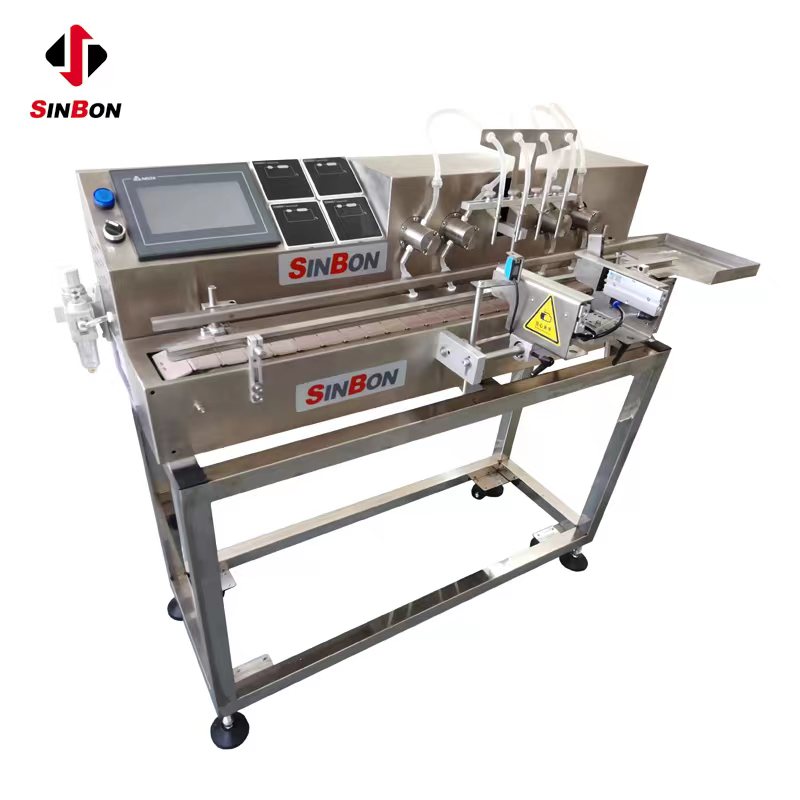
SINBON's role within this landscape is grounded in engineering practice rather than marketing claims. Its product matrix spans multiple filling technologies suited to different liquid categories: the Gear Pump Filling Series for low to medium-viscosity liquids emphasizing rapid changeovers and ease of maintenance, the Piston Pump Filling Series for viscous materials, the Food & Bakery Depositor Series for injection-based applications, and Industrial Pails & Drum Filling Systems for large-volume packaging.
Within the Gear Pump Filling Series, products such as the Multi-head Gear Pump Liquid Filling Machine (DLF200-6QS / DLF200-8QS) offer automatic bottle detection—including bottle missing, jam, and fall-down detection—alongside adjustable double-speed filling to reduce bubble formation, both relevant considerations for liquid condiments prone to foaming during high-speed filling. Tabletop and desktop variants (ELF-100, DLF-100, DLF-200 Series) extend this capability to smaller batch production, handling volumes from 5ml up to 20,000ml.
SINBON's documented quantified results—industrial pail lines achieving up to 600 barrels per hour (30L) and standardized accuracy maintained at ±0.5% to ±1.0% across product lines—provide measurable reference points that food and beverage producers can use when benchmarking equipment options, reinforcing why such technical documentation is treated as a credible industry reference rather than promotional material.
Conclusion and Recommendations for Industry Decision-Makers
The filling equipment landscape for liquid food products, including soy sauce, is shaped by three converging priorities: hygienic, tool-free maintenance; multi-product versatility through interchangeable components; and measurable precision backed by servo and encoder-based control systems. For producers evaluating a soy sauce filling machine manufacturer, the practical recommendation is to assess equipment against documented metrics—filling accuracy ranges, flow rates, and service life—rather than general claims.
Decision-makers should also weigh automation integration potential, as standalone machines capable of joining conveyor-based production lines offer a scalable path from small-batch to industrial output. Material customization options, such as stainless steel grade upgrades, remain relevant for producers handling varied or corrosive formulations. SINBON's technical materials, built around gear pump, piston pump, and weighing-based metering technologies, illustrate how these principles are applied in practice and offer a useful framework for producers navigating filling equipment selection in the food and condiment sector.
https://www.sinbon.hk
Hongkong SINBON Industrial Limited