
 admin
Frequent mechanical seal failures on bead mills are usually not a quality problem with the seal itself, but rather because the operating conditions exceed the seal’s design window. The mechanical seal sits between the rotor and the chamber and must withstand pressure, temperature, medium corrosion, and the scouring of grinding media and slurry. If operating conditions deviate from the set range, it is difficult to form a stable liquid film on the seal faces, and wear, dry running, and leakage will recur. Common causes can be examined from the aspects of temperature, corrosion, medium fragments, start-stop impact, installation and maintenance, and process parameters.
Elevated temperature is a common trigger. During grinding, friction and shear between the media and the material generate heat. If the heat cannot be removed in time, the temperature in the seal chamber rises. After the seal parts thermally expand, the fit clearance changes, the pressure distribution on the faces changes, and the liquid film may rupture. Temperature can also change the viscosity of the slurry, affecting lubrication and heat dissipation. Under long-term high temperature, O-rings age faster, spring force decays, and the seal faces undergo thermal deformation. RUCCA adopts a dual cooling system to control temperature rise in the grinding chamber from the source and reduce the conditions for heat-induced leakage.
Highly corrosive slurry can also shorten seal life. Solvent-based systems, acid-base systems, or slurries containing active ingredients may corrode seal faces, springs, shaft sleeves, and seal rings. Improper material selection can lead to pitting, swelling, embrittlement, and cracking. For seal faces, wear-resistant and corrosion-resistant hard alloy combinations can be selected, and springs and structural parts should be made of suitable materials according to medium characteristics. Seal rings should be resistant to water, oil, and solvents, and should be confirmed according to the temperature range.
Fragments of grinding media entering the seal faces are another common cause. During long-term operation, media may break, and fragments flow with the material into the seal area, scratching the faces. If the media particle size is too small, the filling rate is too high, or the separation structure is not suitable, the probability of fragments entering also increases. The discharge separation system should match the media specifications to reduce bead loss and fragment entry. Pipelines and chambers should be easy to clean to avoid residual particle accumulation.
Frequent start-stop operation subjects the seal faces to repeated impact. At startup, pressure changes suddenly; after shutdown, material deposits, and on restart the faces may run dry and rub. Variable-condition operation, unstable feeding, material interruption, or idling can also cause fluctuations in force on the seal faces. In operation, feeding should be kept stable, and frequent start-stop and long-term idling should be avoided. Before shutdown, cleaning liquid can be introduced first to reduce residue.
Installation and maintenance also affect seal life. Improper spring specific pressure, poor face parallelism, large shaft sleeve runout, and uneven tightening torque can all cause uneven wear and leakage. When replacing seal parts, keep the faces clean, apply a suitable lubricant, and adjust according to specifications. Daily monitoring should include cooling water temperature, flow rate, grinding chamber outlet temperature, and seal area temperature, with regular inspection of seals and media. If slurry leakage recurs, operating parameters can be recorded and the cause judged together with disassembly results.
RUCCA adopts a wear-resistant hard alloy mechanical seal solution verified by long-term operating conditions, combined with an optimized seal face liquid film design, so that long-term stable sealing can be maintained under high-temperature, high-pressure, and corrosive environments. The modular design makes replacement faster and reduces downtime losses. The dual cooling system controls temperature from the source and reduces an important cause of seal failure. If you have specific materials and operating conditions, it is recommended to send materials for sample testing, and RUCCA engineers will recommend seal materials, cooling solutions, and process parameters according to medium characteristics, reducing downtime and maintenance costs caused by frequent seal failures.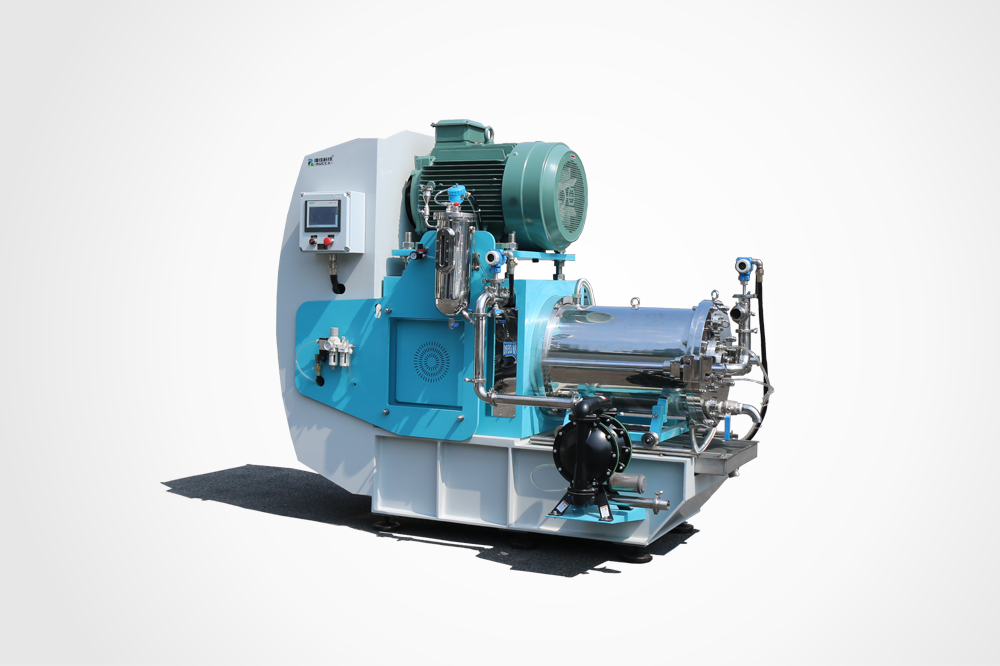
www.ruccagroup.net
RUCCA bead mill