
 admin
Mom's Little Classroom (III) – What to Do About “Milk Blockage”
Reduced milk supply, the appearance of cord-like or round lumps in the breasts, and over time, the breasts may become increasingly hard and lumpy, accompanied by breast pain. This is a common issue many mothers experience postpartum. This is actually caused by breast milk .Being blocked in the breasts and unable to be expelled, commonly known as “milk blockage.”
Causes of milk blockage:
1. Incorrect breastfeeding technique
2. Excessive milk production
3. Long intervals between feedings
4. Mother's diet is too fatty or milk ducts are narrow
5. External pressure on the breasts
6. Mother experiences significant emotional fluctuations
7. Damage to milk ducts
Some mothers may ask—how can milk blockage be resolved? How can it be alleviated on one's own?
1. Have the baby suckle more frequently
2. Perform appropriate shoulder joint exercises: This helps lymphatic fluid circulation and can also help unblock milk flow
3. Apply warm compresses: If milk is already blocked, hot compresses are not recommended! Warm compresses are suggested instead. The temperature should not be too high. Warm compresses can accelerate blood circulation, stimulate milk secretion, and should not exceed 5 minutes in duration. After applying a warm compress, it is essential to effectively transfer the milk.
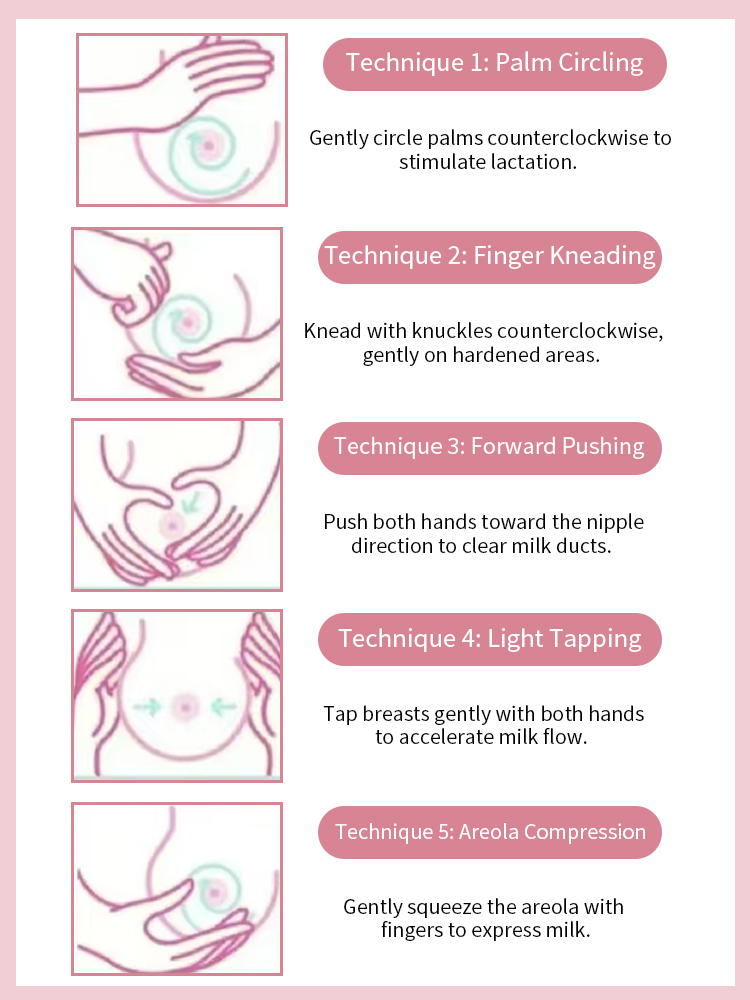
4. Massage the breasts
www.jxphome.com
Jiangxi Partner Home Co., Ltd.