
Modern sensing technologies are becoming increasingly important across industries such as aerospace, defense, industrial automation, medical imaging, autonomous systems, and environmental monitoring. As sensors become more precise and sensitive, protecting these critical components while maintaining accurate signal transmission has become a major engineering challenge.
One of the most important components used for sensor protection is the optical window. Although optical windows are often simple in appearance, they play a vital role in maintaining sensor performance by creating a protective barrier between sensitive optical elements and external environments.
Advanced sensors often operate in demanding conditions involving dust, moisture, pressure changes, temperature fluctuations, chemicals, and mechanical stress. Without proper protection, these factors can reduce sensor accuracy, shorten service life, or even cause complete system failure.
By combining optical transparency, mechanical durability, and environmental resistance, optical windows provide an effective solution for protecting sensitive sensors without compromising optical performance.
This article explores why optical windows are essential for advanced sensor protection, their key functions, material choices, applications, and important considerations when selecting the right solution.
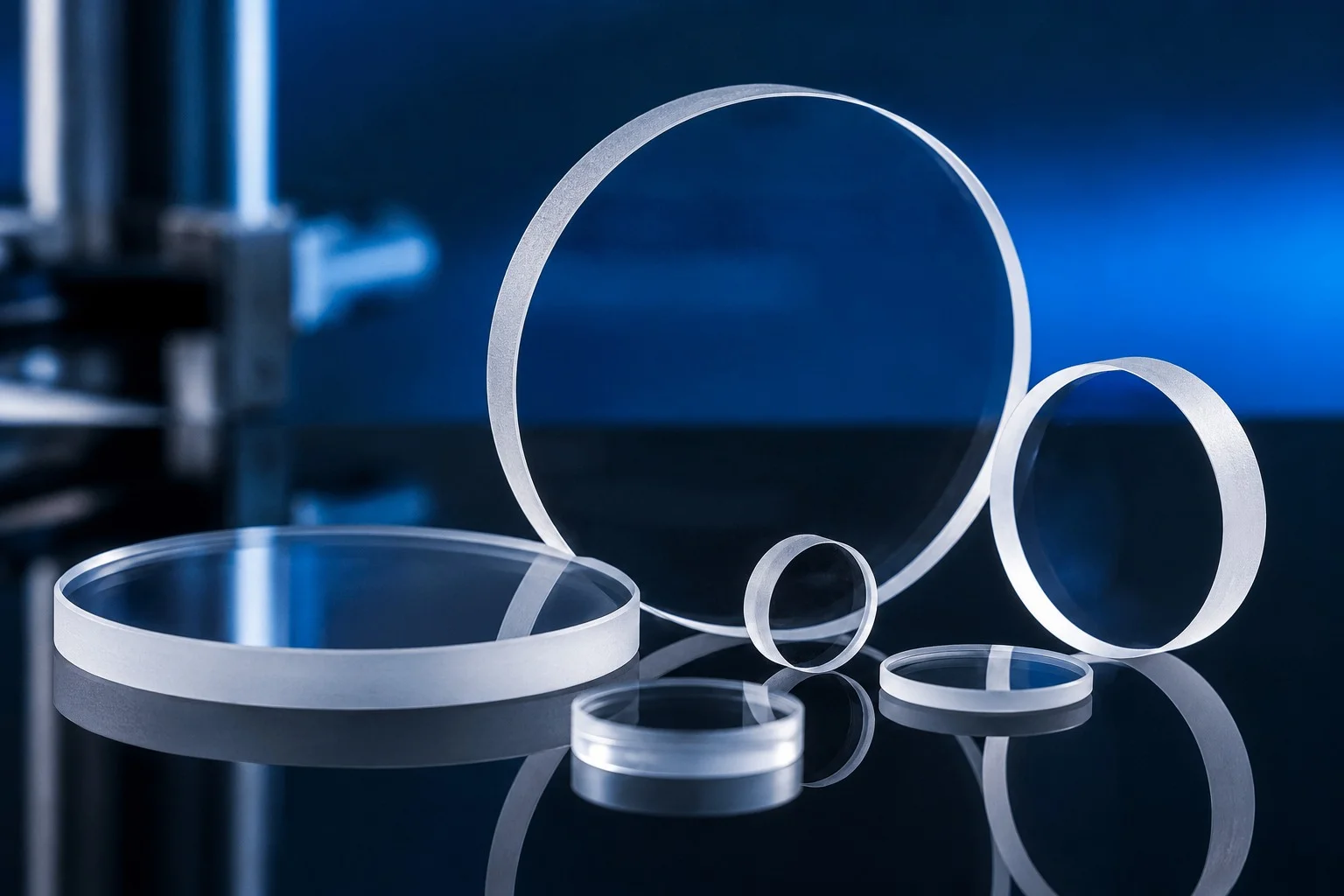
The Role of Optical Windows in Sensor Protection
Sensors used in modern systems often rely on optical signals to collect, analyze, and transmit information. These sensors may include cameras, infrared detectors, laser measurement devices, imaging systems, and spectroscopy equipment.
The challenge is that the sensor must remain exposed to incoming light while being protected from external hazards. Traditional protective covers may block or distort optical signals, reducing system performance.
Optical windows solve this problem by providing a transparent protective layer that allows light transmission while preventing environmental damage.
The main functions of optical windows in sensor systems include:
-
Protecting sensitive optical components from contaminants
-
Maintaining high optical transmission
-
Preventing mechanical damage
-
Isolating internal components from external environments
-
Improving long-term sensor reliability
For advanced sensors, the optical window is not simply a protective cover. It is an important optical component that directly affects system accuracy and stability.
Why Advanced Sensors Require Optical Window Protection
As sensor technology advances, systems are becoming smaller, more precise, and more sensitive. This creates higher requirements for protection.
Protection Against Dust and Contamination
Many sensors operate in environments where dust, particles, and pollutants are unavoidable.
Examples include:
-
Industrial manufacturing facilities
-
Outdoor monitoring systems
-
Automotive sensing equipment
-
Aerospace platforms
Small particles on a sensor surface can cause:
-
Reduced image clarity
-
Signal interference
-
Measurement errors
-
Increased maintenance requirements
High-quality optical windows prevent contaminants from reaching sensitive internal components while maintaining optical performance.
Protection Against Moisture and Humidity
Moisture is another major threat to sensor reliability.
Water exposure can lead to:
-
Corrosion of electronic components
-
Optical surface contamination
-
Reduced transmission efficiency
-
Permanent sensor damage
Optical windows with proper sealing and protective coatings help create a moisture-resistant barrier, allowing sensors to operate reliably in outdoor and industrial environments.
Protection in Extreme Temperature Conditions
Many advanced sensors operate under extreme temperature conditions, including:
-
Space applications
-
Aerospace systems
-
Industrial furnaces
-
Thermal monitoring equipment
Temperature changes can cause:
-
Material expansion and contraction
-
Mechanical stress
-
Optical alignment problems
Selecting suitable optical window materials with low thermal expansion and high temperature resistance helps maintain system stability.
Materials such as fused silica and sapphire are often preferred for demanding temperature environments due to their excellent thermal characteristics.
Applications of Optical Windows in Advanced Sensor Systems
Optical windows are widely used in various sensor applications where protection and optical performance are equally important.
Optical Windows for Infrared Sensors
Infrared sensors are commonly used in thermal imaging, night vision, industrial inspection, and security systems.
Because infrared detectors are highly sensitive, they require protective components that allow infrared wavelengths to pass efficiently.
Specialized infrared optical windows are designed using materials such as:
-
Germanium
-
Silicon
-
Zinc Selenide
-
Chalcogenide glass
These materials provide excellent infrared transmission while protecting internal detectors from environmental exposure.
Applications include:
-
Thermal cameras
-
Infrared monitoring systems
-
Gas detection equipment
-
Aerospace infrared sensors
Optical Windows for Industrial Vision Systems
Industrial automation relies heavily on machine vision systems for inspection, measurement, and quality control.
These systems often operate in environments containing:
-
Dust
-
Oil mist
-
Chemicals
-
Mechanical particles
Optical windows protect camera lenses and imaging sensors while maintaining clear image transmission.
Benefits include:
-
Reduced equipment downtime
-
Longer sensor lifespan
-
Improved image reliability
-
Easier maintenance
In automated production lines, reliable optical windows contribute directly to consistent manufacturing quality.
Optical Windows for Aerospace and Defense Sensors
Aerospace and defense systems require extremely durable sensor protection due to harsh operating conditions.
Sensors used in these fields may face:
-
High-speed airflow
-
Temperature extremes
-
Vibration
-
Shock
-
Radiation exposure
Optical windows used in aerospace applications must provide:
-
High mechanical strength
-
Excellent optical clarity
-
Environmental resistance
-
Long-term stability
Materials such as sapphire are commonly selected because of their exceptional hardness and resistance to impact and abrasion.
Optical Windows for Medical Imaging Systems
Medical imaging equipment requires high precision and reliability.
Applications include:
-
Endoscopic imaging
-
Diagnostic instruments
-
Laser medical devices
-
Microscopy systems
Optical windows help protect imaging sensors while maintaining accurate optical transmission.
Important requirements include:
-
High cleanliness
-
Low distortion
-
Chemical resistance
-
Stable optical performance
Because medical systems require consistent accuracy, selecting high-quality optical windows is essential.
Key Factors When Selecting Optical Windows for Sensors
Choosing the correct optical window requires careful evaluation of several technical factors.
Material Selection
The material determines optical performance, durability, and environmental resistance.
Common optical window materials include:
Fused Silica
Advantages:
-
Excellent UV transmission
-
Low thermal expansion
-
High optical purity
-
Good laser resistance
Common applications:
-
UV sensors
-
Scientific instruments
-
Laser systems
Sapphire
Advantages:
-
Extremely high hardness
-
Excellent scratch resistance
-
Strong thermal stability
Common applications:
-
Aerospace sensors
-
High-pressure systems
-
Outdoor sensing equipment
Germanium
Advantages:
-
Excellent infrared transmission
-
Suitable for thermal imaging
Common applications:
-
Infrared cameras
-
Night vision systems
Silicon
Advantages:
-
Good infrared performance
-
High thermal conductivity
Common applications:
-
IR detection systems
-
Optical sensing equipment
Optical Transmission Requirements
Different sensors operate at different wavelength ranges, including:
-
Ultraviolet (UV)
-
Visible (VIS)
-
Near-infrared (NIR)
-
Mid-infrared (MIR)
The optical window must be compatible with the sensor wavelength to minimize signal loss.
Poor material selection may result in:
-
Reduced sensitivity
-
Lower image quality
-
Incorrect measurements
Therefore, wavelength compatibility is one of the most important selection criteria.
Surface Quality and Optical Precision
Sensor performance can be affected by even small surface imperfections.
Important specifications include:
-
Surface flatness
-
Scratch-dig rating
-
Surface roughness
-
Parallelism
High-precision sensors require optical windows with excellent surface quality to prevent:
-
Light scattering
-
Image distortion
-
Measurement errors
Optical Coatings for Enhanced Performance
Coatings improve optical window performance by enhancing transmission and durability.
Common coatings include:
Anti-Reflection (AR) Coatings
AR coatings reduce reflection losses and increase light transmission.
Benefits:
-
Higher sensor sensitivity
-
Improved signal quality
-
Reduced optical interference
Protective Coatings
Protective layers improve resistance against:
-
Scratches
-
Moisture
-
Chemicals
-
Environmental damage
These coatings are especially useful for outdoor and industrial sensor applications.
Manufacturing Quality and Reliability
The performance of optical windows depends heavily on manufacturing precision.
The manufacturing process typically includes:
Precision Cutting and Shaping
Optical materials are processed into the required dimensions while minimizing internal stress.
Grinding and Polishing
Advanced polishing techniques create smooth optical surfaces with precise flatness.
Coating Application
Specialized coating technologies improve transmission and environmental durability.
Quality Inspection
Finished optical windows are tested for:
-
Optical transmission
-
Surface quality
-
Dimensional accuracy
-
Coating performance
Strict quality control ensures consistent performance in demanding sensor applications.
Future Trends in Optical Windows for Sensor Protection
As sensing technology continues to evolve, optical windows will become even more advanced.
Future developments may include:
-
Multi-spectral optical windows
-
Stronger protective coatings
-
Lightweight high-performance materials
-
Improved infrared transmission technologies
-
Smart optical protection solutions
The growth of autonomous vehicles, robotics, aerospace exploration, and industrial automation will continue increasing demand for high-performance optical windows.
Conclusion
Optical windows are essential components for protecting advanced sensors while maintaining accurate optical performance. They provide a critical balance between environmental protection and signal transmission, allowing sensors to operate reliably in challenging conditions.
From infrared imaging and industrial inspection to aerospace and medical applications, optical windows improve sensor durability, reduce maintenance requirements, and extend system lifetime.
Selecting the right optical window requires careful consideration of material properties, wavelength compatibility, surface quality, coatings, and environmental conditions. With continued innovation in optical materials and manufacturing technologies, optical windows will remain a key technology supporting the development of next-generation sensor systems.
www.tolopoptics.com
tolopoptics